

Why a structured lab protocol document matters
Clear written protocols improve reproducibility across students, staff shifts, and collaborators. They reduce ambiguity about concentrations, incubation times, instrument settings, and safety precautions—especially when work spans molecular biology, cell culture, analytical chemistry, or instrument-heavy workflows. A consistent layout makes training faster and helps you compare runs when troubleshooting unexpected results.
Word (.docx) vs PDF—which download should you use?
The DOCX file is ideal when you need to rename sections, insert institutional headers, extend the materials table, or duplicate blocks for multi-day experiments. The PDF mirrors the layout for quick reference, screen sharing, or printing without accidental edits. For version control, many labs keep the editable document as the source of truth and export a dated PDF when a method is approved or frozen.
How to use this experiment protocol template
- Fill in experiment title, date, responsible researcher, and version or revision ID.
- Write a concise objective and list hazards, PPE, and waste streams relevant to your procedure.
- Complete the materials section with catalog numbers, lot numbers where required, and exact concentrations—not vague labels.
- Break the procedure into ordered steps; note incubation temperatures, durations, and decision points (e.g., “if color develops, proceed to step …”).
- Capture results, observations, and citations so the document links naturally to your lab notebook or ELN.
What belongs in a strong laboratory protocol
Beyond this outline, high-quality SOP-style methods often include:
- Equipment model and software/firmware version when it affects the outcome
- Acceptance criteria or QC checkpoints before continuing
- Known failure modes and corrective actions
- References to MSDS/SDS, risk assessments, or ethics approvals where applicable
From a static template to a guided lab run
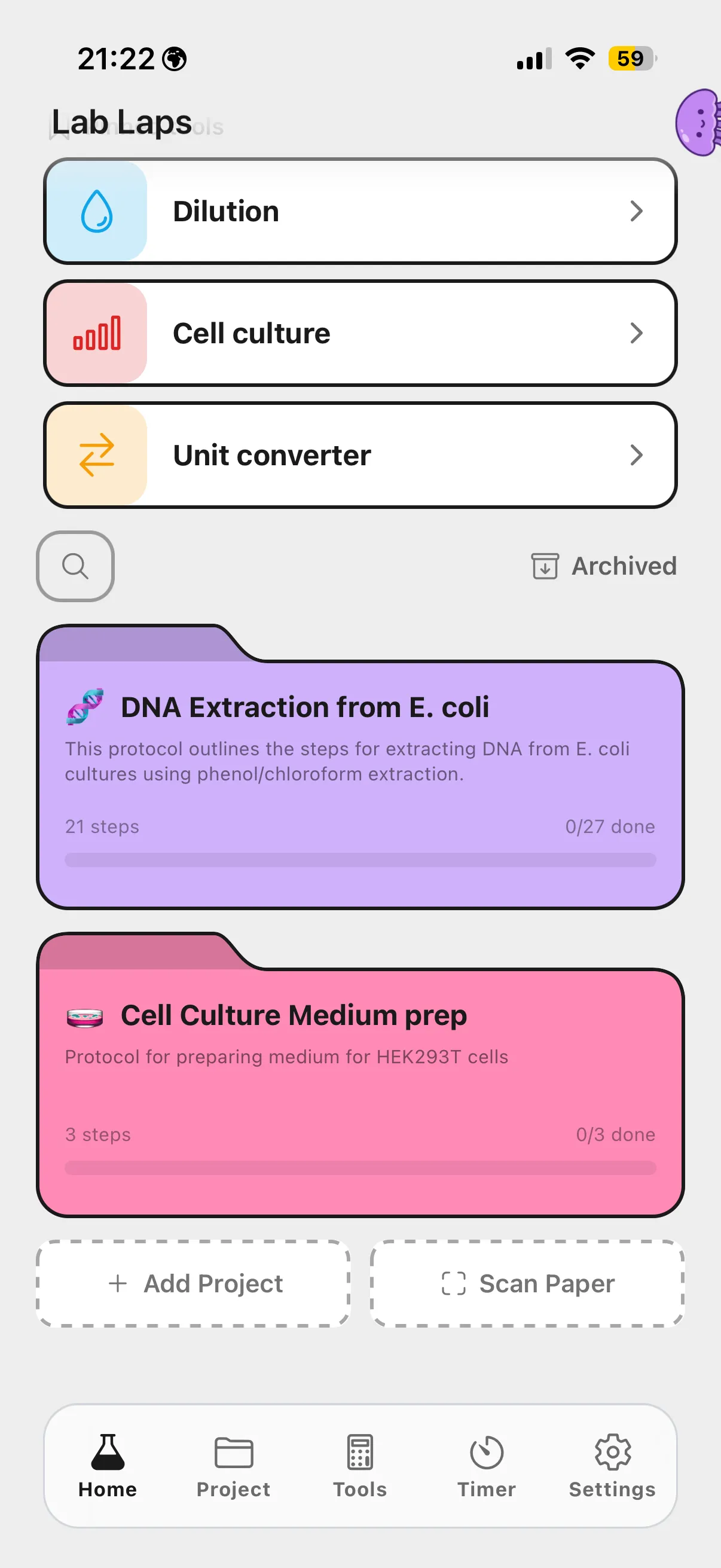
Documents help you design and audit methods; they do not alert you when a step should start or end. On the bench, Lab Laps helps you run multi-step protocols with named timers, offline-friendly access, optional cloud sync when you sign in, and shareable project links when you collaborate—without replacing your formal documentation.
Frequently asked questions
Is this laboratory protocol template free to use?
Yes. You can download the Word and PDF files without creating an account. Use and adapt them for your own non-commercial or commercial lab work; still verify everything against your institution’s rules and any applicable regulations.
Should I download the DOCX or the PDF?
Choose the .docx file if you want to edit sections, add your lab logo, or match your internal SOP style. Choose the .pdf if you want a fixed layout for quick printing or read-only sharing. Many teams keep an editable master (DOCX) and export PDF snapshots when they freeze a version.
Can I use this as a GLP or GMP protocol document?
This is a general-purpose starter layout, not a certified template for regulated quality systems. If you work under GLP, GMP, CLIA, or similar frameworks, your quality unit usually defines required sections, approvals, and versioning—adapt this file to meet those controls rather than treating it as complete compliance documentation.
How is a written protocol different from a lab notebook entry?
A protocol is the planned method: objectives, materials, step sequence, timing, and safety notes you intend to follow. A lab notebook entry records what you actually did, observations, deviations, and raw results. This template leans toward the “planned method” side; you can pair it with your ELN or paper notebook for traceability.
Will this template run my experiment timers for me?
No—the downloads are static documents. For live runs with multiple named steps and timers on your phone, use the Lab Laps app’s protocol workflow alongside your written method.
Related guides
Deep dives on tracking methods in real workflows—useful alongside this printable protocol worksheet:
- How to track a protocol in the lab — planning, teams, and moving beyond ad hoc timers.
- Lab experiment tracker comparison — paper, spreadsheets, ELNs, and dedicated protocol timers compared.